
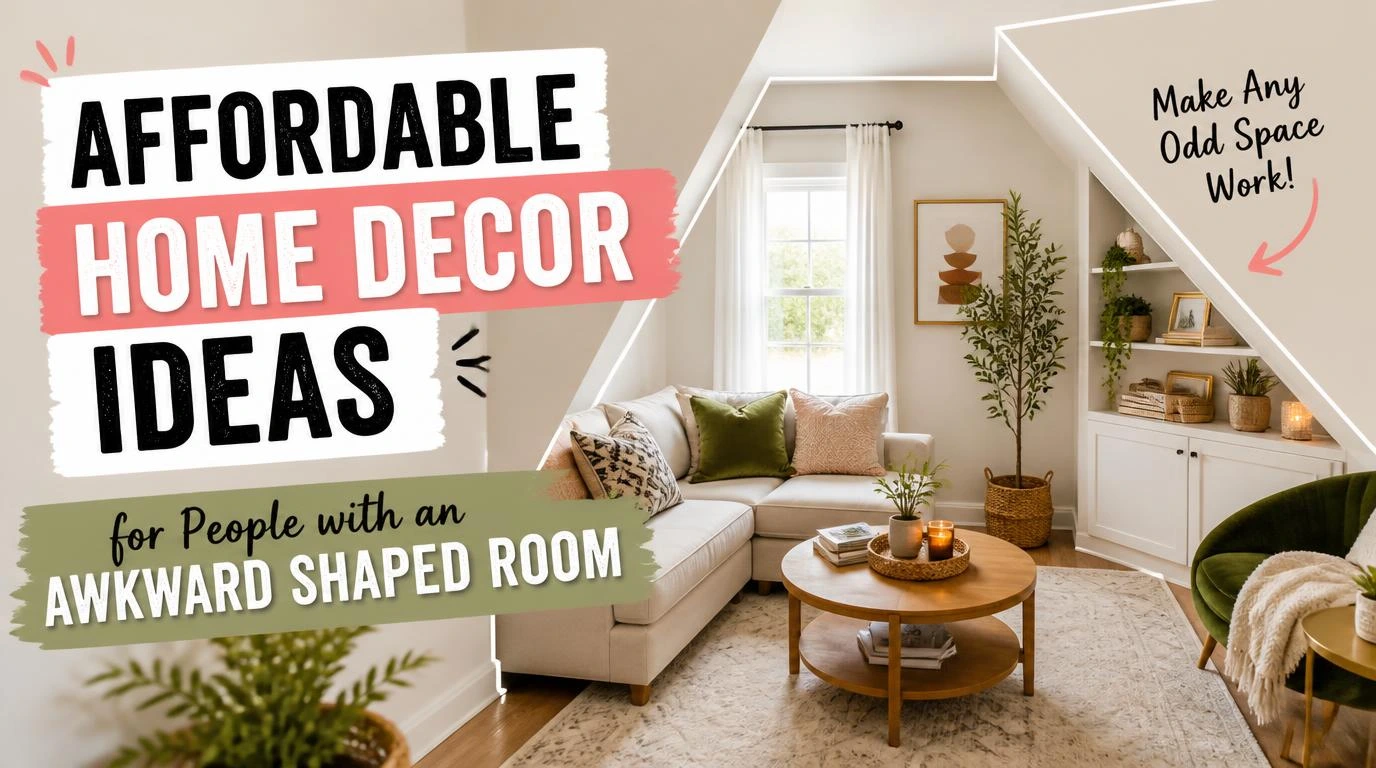
Finding affordable home decor ideas for people with an awkward shaped room feels almost impossible when standard furniture refuses to fit. You drag a couch across the floor, shove a bookcase into a corner, and immediately realize nothing looks right. I spent months staring at my own slanted, narrow living space before realizing the quirks are not design flaws. They simply demand much smarter choices that spare your savings.
1. Float a Round Rug to Blur Uneven Angles
Rectangular rugs instantly expose walls that run crooked or sit off-kilter. When you toss down an eight-foot round jute rug from Target or Rugs USA, your eyes lose track of the jagged edges.
The soft circle pulls all visual weight straight to the middle of the floor. Floating furniture around a circular core suddenly makes a bizarre triangular corner look completely deliberate.
2. Mount Sconces to Clear Up Cramped Floors
Bulky floor lamps eat precious floor tiles right where your walkways already feel pinched. Plug-in brass or matte black wall sconces from Amazon cost around thirty dollars and screw directly into studs.
Run the fabric cords straight down the drywall using adhesive clips for a finished look. You gain cozy, layered accent lighting right above your sofa without losing two square feet of breathing room.
3. Build a Nook with Budget Floating Shelves
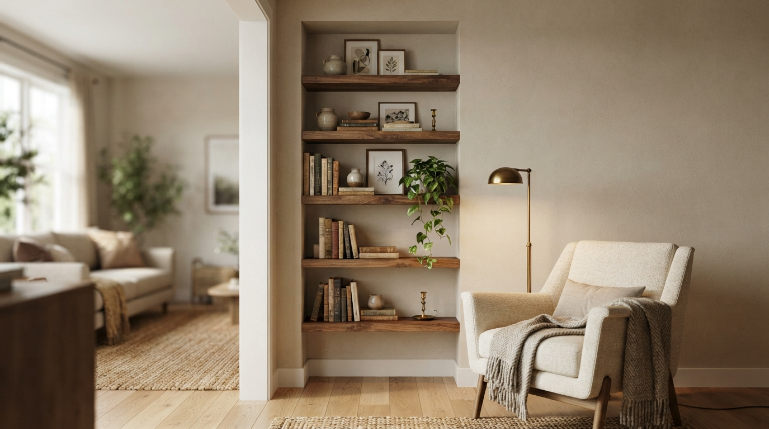
Every odd room hides at least one weird wall alcove that mocks regular furniture. Grab four inexpensive pine boards from Home Depot along with basic heavy-duty steel brackets.
Stain the timber a deep walnut shade and mount them floor to ceiling inside that weird recess. You instantly convert a frustrating dead zone into a rich home library for less than fifty bucks.
4. Fake Extra Symmetry with High Velvet Curtains
Lopsided window placements can throw an entire room off balance the second you walk inside. Pick up two packs of extra-long velvet drape panels from IKEA to solve the dilemma.
Hang an inexpensive black metal rod all the way up near the ceiling, spanning well past the window frame. This clever visual trick creates the illusion of tall, centered windows while softening steep wall angles.
5. Zone Long Spaces with an Open Bookshelf
Bowling-alley living rooms leave people stranded with too much empty floor running down the center. Set an open-back cube unit, like the classic IKEA Kallax, perpendicular to your longest flat wall.
It acts as a breezy partition that lets daylight pass straight through to both sides. You get distinct functional zones for lounging and dining without dropping hundreds on a custom privacy screen.
6. Pick Round Coffee Tables to Smooth Tight Traffic
Square and rectangular coffee tables love to bite kneecaps inside narrow or wedge-shaped seating layouts. Swapping mine for a thrifted, circular glass table eliminated every clumsy bottleneck overnight.
Curved edges encourage smooth foot traffic and keep small gathering spots feeling breezy. A clear glass or pale birch top delivers open space vibes that visually expand the entire room.
7. Hang Large Mirrors to Double Natural Light
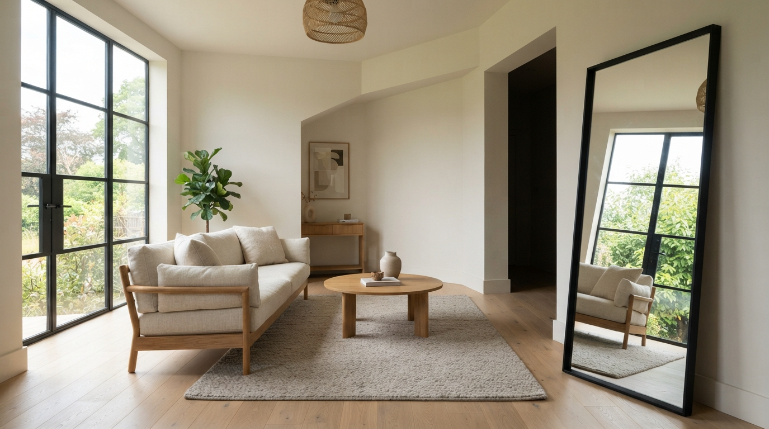
Slanted ceilings or odd exterior bump-outs frequently block window light from reaching gloomy far corners. Pick up a cheap full-length floor mirror from Walmart and mount it opposite your best light source.
Angle it slightly toward the darker section of your floor plan. The bounce creates bright reflected depth that makes skewed walls feel twice as far apart as they actually are.
8. Lean into Low-Profile Seating
Tall, puffy sofas act like brick barricades when ceilings slope down low or walls sit close. Choose mid-century inspired loveseats or futon frames featuring clean, low wooden legs and shallow armrests.
Keeping the silhouette low exposes more continuous drywall and keeps sightlines wide open. That extra vertical clearance prevents slanted cottage walls from feeling like they are caving in on your head.
9. Blend Odd Bump-Outs with Bold Paint
Ductwork chases and masonry columns often stick out like sore thumbs right where you want things flat. Instead of hiding them, paint the entire wall including the obstruction in one rich color like olive or navy.
Uniform dark tones camouflage sharp, protruding corners by absorbing natural room shadows. A single monochrome wash tricks the brain into seeing one flat plane rather than three awkward structural jogs.
10. Maximize Corner Storage with Tiered Ladder Desks
Cramming a boxy computer desk into an angular corner wastes floor space and blocks natural walkways. A lean, leaning ladder desk tucks neatly into tight wedges while utilizing vertical real estate.
The stepped shelving holds books, art, and office supplies upward instead of outward. It forms an efficient compact workspace that costs very little while keeping narrow floor lanes clear.
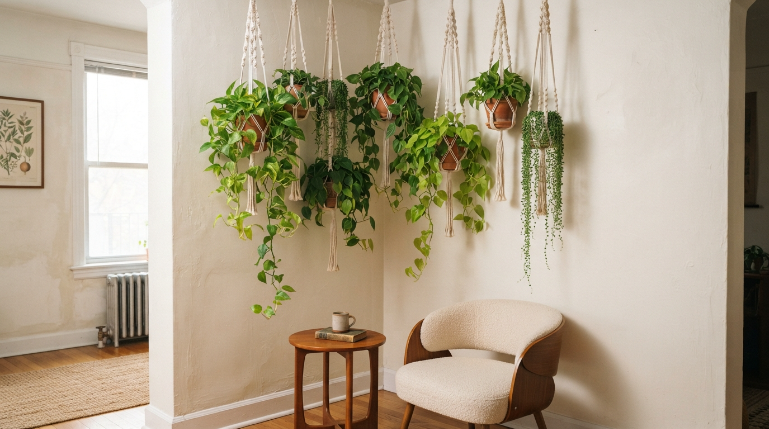
11. Hang Hanging Planters to Soften Harsh Architectural Edges
Sharp drywall intersections and uneven soffits can make a home feel cold and rigid. Pick up basic macrame plant hangers and ceiling hooks to suspend pothos vines right in front of awkward drywall angles.
The cascading green leaves blur harsh structural lines and bring fresh texture into barren spots. Layering organic shapes provides great tactile warmth that pulls attention away from uneven architecture.
12. Mix Multifunctional Storage Ottomans for Flexible Seating
Rigid sectional sofas lock an oddly shaped layout into one stubborn, immovable arrangement. Instead, pair a compact couch with two affordable storage ottomans wrapped in boucle or faux leather.
They serve as footrests, hidden blanket bins, and movable guest perches whenever friends visit. Having adaptable, flexible furniture lets you reconfigure your room on the fly as your daily needs change.
13. Create a Cozy Reading Corner in Triangular Gaps
Weird triangular alcoves under stairs or bay window corners usually end up gathering dusty junk. Toss an oversized thrifted armchair right into the apex, accompanied by a small floor cushion and a warm floor lamp.
Turning a strange dead gap into an intentional retreat gives purpose to forgotten square footage. A dedicated reading nook proves that you do not need symmetrical walls to build something genuinely charming.
14. Add Peel and Stick Wallpaper to a Single Focal Wall
When your eyes do not know where to settle, an unconventional floor plan feels chaotic and messy. Roll affordable, removable geometric wallpaper across the one clean, straight wall you actually have.
The vibrant print grabs eyes immediately upon entry and anchors the rest of the decor. Establishing an undeniable focal point stops visitors from scanning the weird angles around the perimeter.
15. Mount a Corner Gallery Wall to Embrace Strange Angles
People usually avoid hanging wall decor across corners where two uneven drywall panels meet. Placing simple thrifted picture frames across both sides of an interior corner creates a stunning wrap-around display.
Paint mismatched yard-sale frames in uniform satin black for a cohesive, intentional gallery feel. This dynamic corner gallery turns an architectural quirk into the most interesting conversation starter in your home.
FAQs
What is the biggest mistake when styling an irregularly shaped room?
Pushing all your furniture against the perimeter walls is the most common misstep. It highlights every awkward angle and leaves dead space in the middle. Float your seating inward around an area rug instead to create a grounded living zone that ignores crooked walls.
How do I arrange furniture around an off-center fireplace?
Do not force the sofa into an unnatural face-off with an off-center hearth. Anchor your primary seating parallel to the longest straight wall, then angle an accent chair directly toward the mantel. This balances the visual weight across the space without choking your everyday walking paths.
Can paint really fix the look of an awkward shaped space?
Painting your walls, baseboards, and ceiling in one consistent shade blurs uneven corners remarkably well. When shadows cannot define where a slanted ceiling begins or where a quirky bump-out ends, the entire interior feels calmer, more cohesive, and much larger than its actual dimensions.
Where should I look for budget-friendly decor items?
Thrift shops, estate sales, and Facebook Marketplace offer incredible deals on vintage solid wood tables, mirrors, and unique accent chairs. Big-box retailers like IKEA, Target, and online discount sites fill in the gaps for inexpensive rugs, modern lighting, and peel-and-stick wall coverings.
Conclusion
Working with a quirky room layout forces you to get creative, rethink traditional floor plans, and spend money much more intentionally. Once you stop fighting the odd angles and start working with them, the space quickly becomes the coziest spot in your house. Which strange corner in your room are you planning to tackle first?