
Standing inside an empty room with blank walls feels paralyzing. Finding beginner friendly home decor tips for people who never decorated before usually leads straight to expensive showroom photos that do not match real life. You do not need an art degree, a massive budget, or professional design instincts to fix that awkward layout. Turning a bland, echoing space into an inviting sanctuary starts with a few practical rules.
Step 1: Anchor the Room Around One Functional Centerpiece
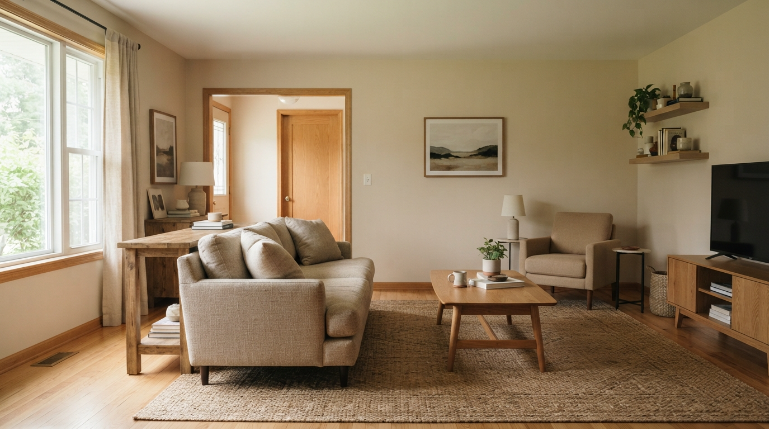
Start with how you plan to use the space daily rather than how it looks on a Pinterest board. Pick a single focal element like an apartment sofa, a wooden dining table, or a vintage media console from IKEA. Arrange this heavy piece first so traffic moves smoothly around the doors and walkways.
Resist pushing every item flat against baseboards out of habit. Pulling a couch just four inches off a wall creates immediate breathing room, establishing proportional balance that makes small apartments feel intentionally arranged instead of cramped.
Step 2: Swap Harsh Overhead Bulbs for Layered Table Lighting
Flipping on the ceiling fixture instantly washes out room textures and creates unflattering shadows in corners. Turn that cold overhead switch off and place warm-white lamps at different eye levels across the perimeter. A floor lamp beside an armchair combined with a small task light on a shelf softens hard architecture instantly.
Look specifically for LED bulbs rated around 2700K on the package. Bright daylight bulbs above 4000K look sterile outside an office setting, whereas lower Kelvin ratings provide a gentle, golden wash that makes mismatched thrift store finds look deliberate.
Step 3: Use Beginner Friendly Home Decor Tips for People Who Never Decorated Before on Rugs
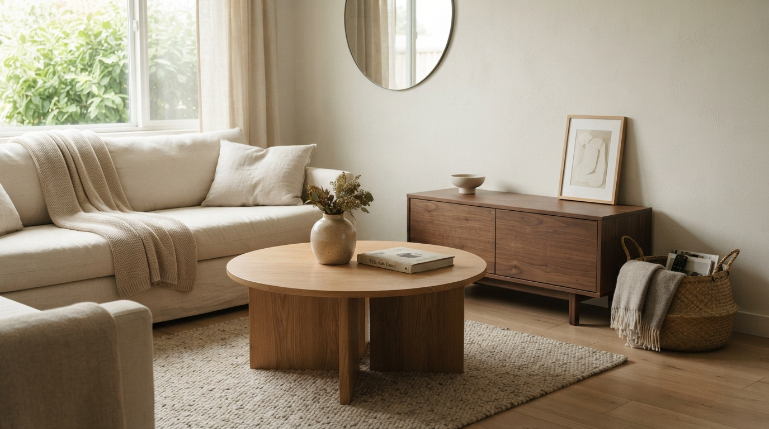
Buying a rug that looks like a tiny postage stamp floating in the middle of the floor remains the most common rookie mistake. A floor covering ties furniture groupings together into a cohesive conversation zone instead of disconnected pieces. Always measure the footprint of your seating area before ordering textiles online from places like Ruggable or Target.
Ensure at least the front two legs of every primary chair or couch rest securely on top of the rug fibers. Grounding your furniture this way establishes clear visual cohesion across open floor plans without building physical dividing walls.
Step 4: Group Wall Frames and Accents in Odd Numbers
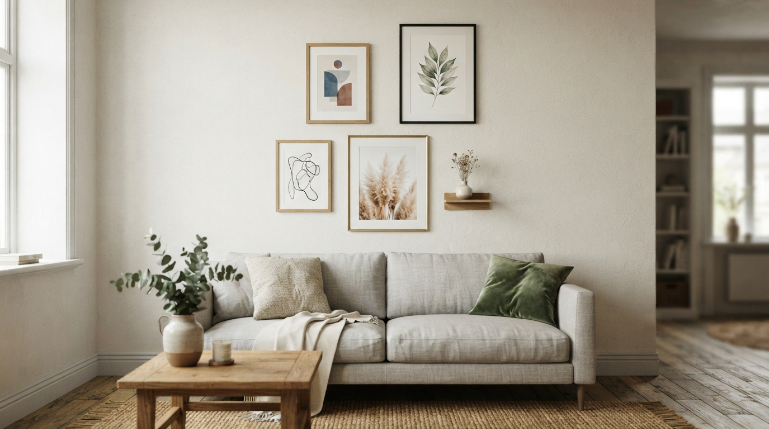
Staring down a blank drywall partition tempts newcomers to nail small framed prints randomly across the entire surface. Collect smaller decorative items and art prints into clusters of three or five instead of scattering them evenly. The human eye processes odd groupings as relaxed and natural rather than stiffly staged.
Leave generous breathing space around these curated clusters to keep surfaces from looking chaotic. Hanging wall art so the center sits 57 to 60 inches from the finished floor keeps your artwork right at standard eye level, preventing an amateur gallery appearance.
Step 5: Mix Everyday Textures Instead of Matching Accent Colors
Walking into a big-box store and purchasing matching curtains, throw pillows, and blankets in identical shades creates a flat, synthetic look. Real living spaces feel comfortable because they combine varied tactile materials like nubby wool, smooth stoneware, woven jute, and brushed metal.
Layer a chunky cotton throw over a leather cushion, or place a matte ceramic vase on top of a polished wooden coffee table. Mixing distinct surfaces delivers tactile depth that prevents neutral rooms from feeling boring, even if you stick strictly to creams, tans, and charcoal grays.
Step 6: Bring Living Greenery into Empty Corners
Dead corners and awkward shelf gaps often need organic movement rather than another manufactured plastic knickknack. Low-light houseplants like a snake plant, pothos vine, or ZZ plant soften hard drywall angles with zero decorating stress. They grow quietly, forgive missed waterings, and cost very little at local nurseries.
Drop the standard plastic grower pot directly into a textured terracotta or woven basket to hide the soil container. Living foliage adds effortless, dynamic energy that static furniture catalogs simply cannot recreate.
Step 7: Clear Surfaces to Prevent Clutter Overload
Empty space on a coffee table or credenza acts as a design choice in itself. Piling every tabletop with candles, coasters, decorative bowls, and magazines quickly suffocates a room. Pick two personal treasures you genuinely love seeing every single morning and clear away the rest into concealed baskets.
Giving your favorite objects room to breathe lets their shapes and colors stand out clearly. Intentional negative space gives the eye a restful place to land, creating a calm environment that feels tidy without feeling sterile.
FAQs
What should a beginner decorate first in an empty living room?
Start directly with the largest seating piece and an appropriately sized area rug. Once those two anchors sit in place, arrange your lighting and accent tables around them. Tackling the core layout first prevents you from wasting money on small accessories that might not fit the room later.
How do I choose beginner friendly home decor tips for people who never decorated before on a tight budget?
Focus your money on comfortable seating and warm lighting first, since they impact your daily comfort most. Source secondary items like accent tables, brass bowls, and ceramic vases from thrift shops, estate sales, or Facebook Marketplace. A coat of dark wood stain easily upgrades dated secondhand furniture.
What is the easiest color palette to work with for beginners?
Stick to a grounded neutral base of warm white, taupe, or soft gray for walls and large furniture. Introduce darker contrasting tones through small accents like black metal floor lamps, rich walnut wood, and patterned linen pillow covers. This palette avoids clashes and simplifies future decor additions.
How high should I hang wall art above my sofa?
Position the bottom edge of your picture frame roughly six to eight inches above the top of the sofa cushions. Hanging frames higher makes the art look disconnected from the furniture below it. Treating the couch and art as one combined visual unit keeps the wall balanced.
Conclusion
Creating a home you enjoy coming back to takes patience and a little trial and error, so avoid rushing to finish everything over a single weekend. Focus on soft lighting, comfortable textures, and layouts that actually serve your daily routines. Which room in your house are you planning to tackle first?